The reburial of Sara and Kito’s remains
Bag of BonesThe reburial of Sara and Kito’s remains was a deliberate second concealment, carried out by Jared Devore’s logger-boys after they had murdered Sara Tidwell and her son. They moved the bodies from an earlier hiding place to the site where Mike Noonan would eventually uncover them, imagining that putting the dead back where the crime occurred might make their own lives normal again. Instead, the reburial binds guilt, silence, and supernatural return into the history of Sara Laughs.
The First Concealment and the Town’s Unwritten History
The reburial followed the murders of Sara and Kito, but the evidence Mike later reconstructs distinguishes it from the killers’ first attempt to hide what they had done. Devore and the others initially dragged the bodies farther into the woods, perhaps toward the place where the north wing of Sara Laughs would later stand. They covered them with brush and returned that night, when leaving the bodies exposed longer might have attracted animals. Mike guesses that they wrapped the remains in canvas and buried them at Bowie Ridge, a secluded area where they had spent much of the summer cutting timber. Jo’s notes did not establish the precise first burial site, so Bowie Ridge remains Mike’s conjecture rather than a confirmed location.
The reburial belongs to a history preserved unevenly. Jo began her investigation as research for an article, at first gathering stories from residents and drawing them out about old letters and diaries. Her material included copied newspaper clippings, dated in her neat hand, and notes that recorded events missing from the town histories. When Mike reads the clippings, he finds the local press describing Sara and the Red-Tops through racist caricature and genial contempt, not an account of the circumstances in which they left. The papers’ silence does not merely leave a gap: set beside Jo’s research, it exposes how public memory could record the performers while withholding the violence done to them.
The broader disappearance of the story is made explicit in Jo’s notes: by the time the Red-Tops played the Castle County Fair, their community near the lake had begun to disperse, yet the town histories contained no whisper of the events. That contrast gives the second burial a social as well as physical meaning. The bodies were moved and hidden; the town’s record also concealed the crime, leaving later discovery dependent on private investigation and fragments rather than an acknowledged public history.
Guilt and the Decision to Move the Bodies
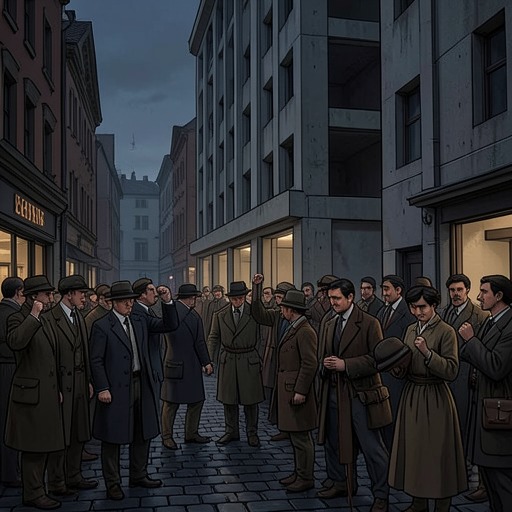
The men who later disturbed the first burial were living with the consequences of their actions. Mike describes them as haunted in a literal sense, with Jared Devore a possible exception: Jared lived another ten years and apparently remained comfortable. The others suffered bad dreams, drank too much, fought and argued, and bristled when anyone mentioned the Red-Tops. Their guilt was compounded by the surrounding community’s silence toward them, though that silence did not amount to an open reckoning with the murder.
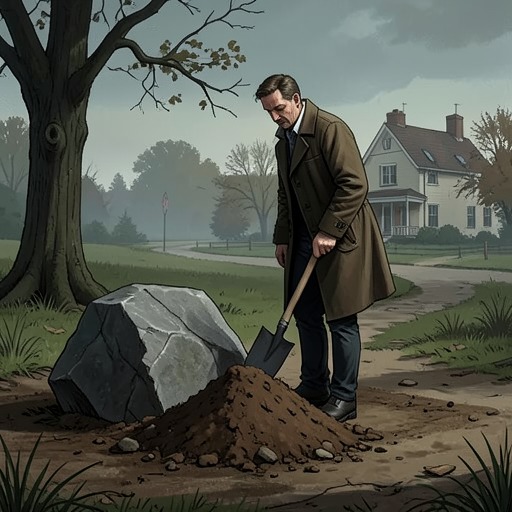
Draper Finney’s death in a quarry—probably by suicide, in Mike’s account—preceded the logger-boys’ idea of what might restore their lives. Mike recounts that the idea came over them like a cold, but was more like a compulsion: they would dig up the bodies and rebury them where the murders had happened, expecting things to return to normal. This motive belongs to the men as Mike reconstructs it from Jo’s notes; the narrative does not present the reburial as a successful act of expiation. Moving the remains changes their location, not the fact of the crime or the men’s responsibility for it.
Jared did not take part in the second burial, according to Jo’s notes. By then, the younger men never went near him. They reburied the bodies without his help, sometime in late fall or early winter of 1902, Mike estimates. The distinction matters: Jared’s earlier influence and the men’s shared history remain part of the chain of events, but the reburial itself was carried out by the logger-boys apart from him.
Discovery and the Return of What Was Buried
The second burial ultimately placed the remains where Mike would dig them up. That eventual discovery turns the men’s effort to contain the past into the means by which its evidence becomes available again. The burial site at Sara Laughs is not simply an old hiding place: it is the point where an act intended to put the crime behind its perpetrators becomes materially legible to someone investigating the house and its history.
The consequences extend beyond the recovery of physical remains. The novel connects the buried dead to the haunting of Sara Laughs and to the men’s persistent guilt, while Jo’s research lets Mike understand the buried history behind the haunting. Her notes, photographs, and copied clippings supply a counter-record to the town histories; they establish a route from local stories and press accounts to the violence that those public narratives had left unspoken. The reburial is therefore both a plot mechanism of delayed discovery and an image of a community trying to relocate, rather than confront, its past.
The novel also places this episode within the larger, recurring force of the past in the present. The men’s attempted return to normality fails; their guilt continues to surface, and the bodies do not remain merely hidden history. Yet the account retains limits: Mike can infer a likely first burial at Bowie Ridge and estimate the second burial’s date, while Jo’s notes do not reveal every detail. That distinction between documented evidence and reconstruction keeps the recovered history powerful without pretending that every silence has been resolved.